
2025-26 Visual Culture Seminar

This is Life 烟火人间 Screening
Dr Jing Wang (Producer)
Tuesday 4 November 2025, 17:00
Synopsis
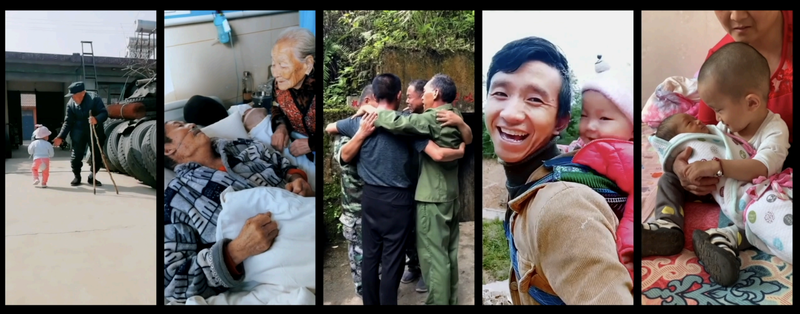
This is Life is a feature-length documentary co-directed by 509 Chinese laborers through the lens of
their mobile phones. Drawn from user-generated short videos on the Kuaishou platform, the film
offers a rare, intimate portrait of everyday life in contemporary China, from truck drivers on endless
highways, to textile workers dancing during lunch breaks, to families returning home for Spring
Festival. Using a unique vertical split-screen format, This is Life transforms ephemeral content into a
shared cinematic experience. Blending moments of absurdity, exhaustion, joy, and quiet resilience,
the film explores how ordinary people use short video to document their lives, express themselves,
and build community. More than just a documentary, This is Life is a visual experiment in collective
storytelling. It challenges conventional notions of authorship, realism, and screen aesthetics in the
age of mobile media.
Speaker Bio
Dr Jing Wang is a Tsinghua Zijing Postdoctoral Researcher at the University of Oxford, jointly based
at the China Centre and the Faculty of Asian and Middle Eastern Studies. Her research focuses on
documentary studies, realist cinema, and visual anthropology. With over 12 years of experience as a
documentary filmmaker, she integrates academic inquiry with creative practice in projects such as
This is Life (2024, Producer). Dr Wang is currently completing her first monograph, Documentary in
Fiction: Global Aesthetic Trends in Realistic Film During the Post-Cold War Era, forthcoming from
Palgrave Macmillan.
Video Vices and Terminal Futures
Dr Julia Keblinska
Tuesday 2 December 2025, 17:00
Abstract
This talk explores the emergence of the video format and the emergence of new, sensationalist cinematic genres, as they
interact with the mediated spaces of urban cinema in late 1980s and 1990s China. While cinema in the first half 1980s
dealt with competition from television, a relatively regulated medium, urban China at the turn of the decade became the
proving ground for the more undisciplined medium of the videocassette. Instead of entertaining consumers at home,
video was a semi-theatrical medium consumed in urban institutions known as video halls that became ubiquitous in the
late 1980s and remained essential fixtures of urban life into the next decade. Video halls were seedy, semi-legal spaces
in which mostly men watched mostly pulpy genres. Video content was often pirated: poorly copied, consumed and
circulated with little regard for elite literary and cinematic taste. A late 80s explosion of violent and sexually suggestive
video titles threatened the economic bottom line of Chinese cinema by tantalizing audiences with material that could not
be shown in Chinese theatres. In response to audiovisual competition, the Chinese film industry indulged in remarkably
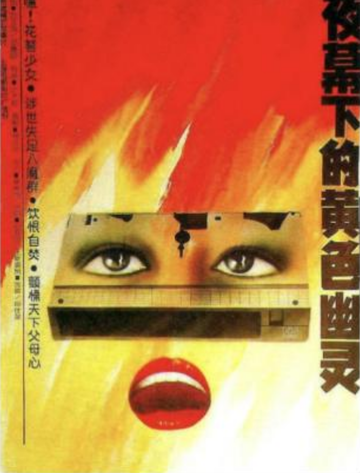
(sexually) violent production. In this analysis of several significant late 80s films, The Last Frenzy (1987), The Price of
Frenzy (1988), Samsara (1988), and The Yellow Specter of the Night (1989), Dr Keblinska shows how video and illicit
genres were both pathologized and embraced to theorize a new embodied and anxious mode of spectatorship. The
shocking exploits of video exploded onto the big screen just as the economic violence of the decade was about to come
to a head in political upheaval. In turning to the culturally low and inhabiting the urban media margins, cinema evinced
a dark turn in Chinese (media) history, failing to live up to the ideals of economic reform and repeatedly gesturing to
social collapse. How do we understand this ‘end of cinema’ when we read it against the violent materiality of the video
encounter?
Speaker Bio
Dr Julia Keblinska is Assistant Professor of Asian Film and Media in Film & Screen Studies, Faculty of Modern and Medieval
Languages and Linguistics, University of Cambridge. She received her PhD from the Department of East Asian Languages
and Cultures, University of California, Berkeley and has previously worked at the Ohio State University.
Performing Inter-Asian Relationality at the Archipelago of Sinophone People’s Theatre
Justyna Jaguścik
Tuesday 10 February 2026, 17:00
Abstract
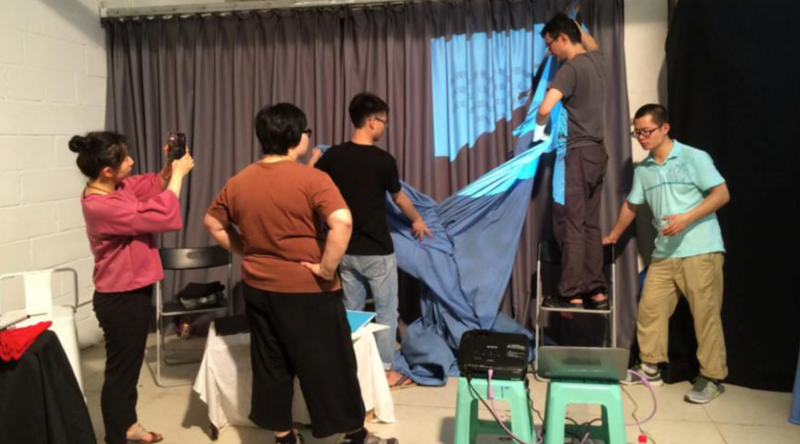
This presentation theorizes Sinophone independent theatre in mainland China and Taiwan as
a geo-literacy project that performatively resists Eurocentric, Sinocentric, and
anthropocentric epistemologies. Situating selected texts and performances by independent
theatre troupes within the Inter-Asian people’s theatre movement, Dr Jaguścik takes Rossella
Ferrari’s (2020) formulation of ‘transnational Chinese theatres’ as a point of departure to
examine whether – and how – contemporary Sinophone independent theatre moves beyond
trauma-centered frameworks to rehearse future-oriented political imaginaries.
The presentation draws primarily on unpublished performance scripts and personal
exchanges with members of Assignment Theatre (差事劇團) and Against Again Troupe (再据
劇團) in Taipei, as well as Fire Tent Theatre Troupe (北京流火帐篷剧社) in Beijing.
Speaker Bio
Dr Justyna Jaguścik is Senior Lecturer in Chinese Language, Culture and History at
the University of Bern, Switzerland. She is the co-editor of Lyrical Experiments in
Sinophone Verse: Time, Space, Bodies, and Things (2025) and Re-Thinking Literary China:
Essays in Honor of Andrea Riemenschnitter (De Gruyter, 2025). Her main research interests
include contemporary Sinophone poetry (particularly by women writers), transmediality in
Sinophone poetry, and cultural activism.
'Steel is the most romantic thing in the world': Industrial party time-travel
novels and the digital fantasy fiction boom
Dr Jessica Imbach
Feb 24th 2026, 17:00
Synopsis
This talk examines the intersection of China’s ‘Industrial Party’ (gongye dang ⼯业党)
ideology and time-travel fiction in contemporary Chinese popular culture. The ‘Industrial
Party’ refers to a distinctive composition of Chinese netizens who champion
technocratic governance and rapid industrialization as pathways to national strength.
Sharing similar conservative views as the US and European alt-right, they also position
themselves as critics of the identity politics of what they term the ‘Emotional Party’
(qinghuai dang 情怀党). One of their most prominent cultural expressions is speculative
time-travel fiction, in which protagonists leverage future knowledge to accelerate China’
s development. My analysis focuses specifically on Qi Cheng’s ⻬橙 bestseller novel
Daguo zhonggong ⼤国重⼯ (Great Power Heavy Industry, 2021), which, although
formally a work of speculative fiction, combines a technomodernist pretense to
scientific objectivity and rationality with the mythologization of (infrastructure) metrics
as indicators of economic and political success. Reading Qi’s novel within the metric-
driven logics of online literature platforms and the broader fantasy fiction boom, this talk
argues that speculative fiction has become a key meta-political site for negotiating
history and national identity, and considers the implications for how we conceptualize
popular literary culture in China today.
Speaker Bio
Jessica Imbach is Assistant Professor of Sinology/contemporary China at the University
of Freiburg, Germany. Her research focuses on modern and contemporary Chinese
literature, narrative theory, new media, and the aesthetics and politics of genre fiction,
particularly fantasy and science fiction. Her recent publications include Digital China:
Creativity and Community in the Sinocybersphere (Amsterdam University Press, 2024)
and Rethinking Literary China: Essays in Honor of Andrea Riemenschnitter (DeGruyter,
2025). She is the PI of the ERC-funded research project SINOFANTASY, which
investigates the contemporary Chinese fantasy fiction boom.
Worlds Without End? Chinese Web Novels, Global Fans, and Sprouts of Meaning
Dr Heather Inwood
Tuesday 28 April 2026, 17:00
Synopsis
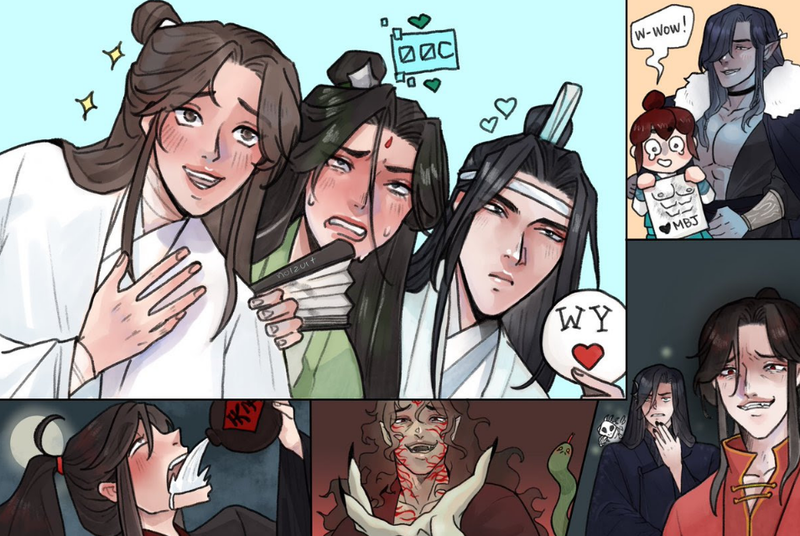
Chinese internet fiction is notorious for its scale, with over half a billion readers and over 40 million
web novels in existence today. Just as voluminous is the fan content that surrounds it, which is
increasingly produced outside of China in languages other than Chinese. What happens to the
worlds of internet fiction when they get reimagined by international fans? And why do some novels
inspire more fan content than others? This talk looks to Japanese pop culture and premodern
Chinese philosophy to understand the age-old tendency of texts to branch out in unexpected
directions, almost as though they have a life of their own.
Speaker Bio
Heather Inwood is Associate Professor of modern Chinese literature and culture in the Faculty of
Asian and Middle Eastern Studies, University of Cambridge. She specialises in contemporary Chinese
cultural studies, focusing on interactions between digital media, literature, and popular culture in the
early twenty-first century. Her book, Verse Going Viral: China’s New Media Scenes (University of
Washington Press, 2014), examines what has happened to modern Chinese poetry in the era of the
internet and the cultural economy. Her second book, Netfic: China’s Other World Literature, will be
on Chinese internet fiction and its surrounding media ecology
Sentimental Republic: Why Feeling Matters in Contemporary China
Dr Hang Tu
Tuesday 26 May 2026, 17:00
Synopsis
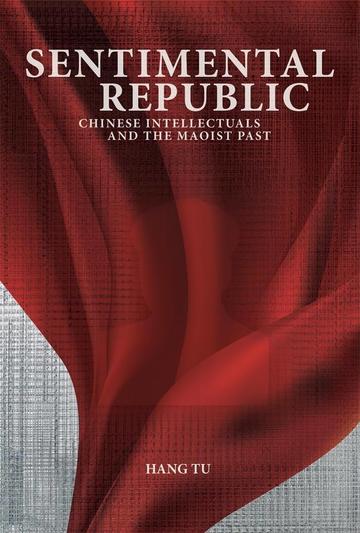
How does emotion shape the terrain of public intellectual debate? Drawing on his recent book,
Sentimental Republic: Chinese Intellectuals and the Maoist Past, Dr Hang Tu proposes emotion as a
new critical framework for rethinking cultural controversy and memory wars in the post-Mao era.
With the onset of market reform, Chinese intellectuals and writers did not simply turn away from
revolutionary feeling. On the contrary, the post-Mao decades witnessed a surge of emotionally
charged debates over the legacies of the Mao era, ranging from the anguished denunciations of
Maoist violence to the elegiac remembrances of socialist egalitarianism. Tracing four decades of
contentious cultural warfare over the Maoist past, from 1978 to 2018, the talk examines how four
major intellectual clusters in contemporary China – liberals, the Left, cultural conservatives, and
nationalists – reinterpreted Mao’s revolutionary legacies in light of the postsocialist transition. By
analysing how rival intellectual camps stirred up melancholy, guilt, anger, and resentment, it argues
that the polemics surrounding the country’s past cannot be properly understood without reading the
emotional trajectories of the post-Mao intelligentsia.
Speaker Bio
Hang Tu is Assistant Professor of Chinese Studies at the National University of
Singapore and Deputy Director of the CCKF–NUS Southeast Asia Center for Chinese
Studies. His research focuses on modern Chinese literature, intellectual history, and
the cultural politics of emotion in modern and contemporary China. His work has
appeared in Critical Inquiry, The Journal of Asian Studies, Modern Intellectual History,
MCLC, and PRISM. He is currently working on a second book project, tentatively titled
How to Be a Cynic: Satire and the Art of Dissent in Twentieth-Century China.
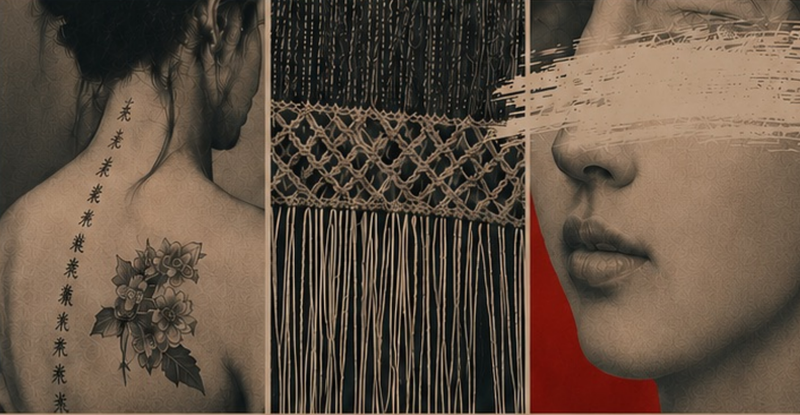
Surfaces in Chinese Visual Culture
Various Speakers
Monday 25 May 2026, 09:45-17:50
Panel 1, 10:00–12:20
-
Li Jinying (Brown University): The Virtual Walls
-
Gerda Wielander (University of Westminster): Seeing, Feeling, Knowing: Reading China's "Open Air Galleries" Through Three Overlapping Frames
-
Sun Han (University of Oxford): White Heiti Characters on Red Background: Residues of the Socialist Visual Experience
Panel 2, 13:20–15:00
-
Chen Jianqing (Washington University): Four Dialectics of the Touchscreen from a Chinese Perspective
-
Yuan Yan (Huazhong University of Science and Technology): Texture: Another Universe of Technical Image
Panel 3, 15:30–17:50
-
Ming Tak Ted Hui (University of Oxford): Itching to Sensationalise: Semantic Shifts of yang in Premodern Chinese Literature
-
Raffaela Rettinger (University of Wuerzburg): Writing on Skin with Needled Brushes: Decorative Tattooing Practices in Premodern China
-
Julius Kochan (University of Oxford): "White Skin and Rosy Cheeks" (白里透红): The Changing Language of Skin Whitening in Contemporary China