
2019-22 Visual Culture Seminar

How to Look Like a Communist
Laurence Coderre, New York University
Tuesday 15 October 2019, 17:00

Abstract
Historians are increasingly drawing on material objects as sources for their research, giving rise to a new set
of methodological challenges. What are the limits of what objects can tell us? How can we think with – rather
than about or for – them? This talk considers these questions from the perspective of two classes of Cultural
Revolution objects: porcelain figurines and vanity mirrors. Specifically, I am concerned with how such objects
were intended to be engaged with visually. How was the idealized Communist meant to look at these objects
in a politically correct way and what was she meant to see?
Speaker Bio
Dr Laurence Coderre is an assistant professor of Modern China in the Department of East Asian Studies at New
York University. She received her PhD in Chinese from the University of California, Berkeley in 2015. Prior to
moving to NYU, she was a postdoctoral research fellow at the University of Michigan. Coderre’s work, which
focuses on Chinese socialist and postsocialist cultural production, has appeared in Comparative Studies of
Society and History, Journal of Material Culture, Modern Chinese Literature and Culture, and Journal of Chinese
Cinemas as well as several edited volumes. Her first book, Newborn Socialist Things: Materiality in Maoist
China (under contract with Duke University Press), examines the material culture of the Cultural Revolution
The Battle of Images: The Sino-Hollywood Negotiation
Ying ZHU, City University of New York and Hong Kong Baptist University
Tuesday 23 November 2021, 17:00 GMT (Hybrid Event)
Abstract
Hollywood dominated the Chinese film market during China’s Republic era, triggering a mixture of fascination and resistance. The
Communist victory in 1949 and the outbreak of the Korean War in 1950 led to an official ban on Hollywood imports by the PRC
government in 1950. China’s film market reopened to Hollywood in 1994 amidst China’s declining domestic output and theatre
attendance. Hollywood has since become a regular fixture in China, spurring simultaneously rejection, admiration, emulation,
competition and coercion. Rejection and repulsion for Hollywood’s historical injustice to the China image; admiration and emulation
for the sheer allure and market prowess of Hollywood pictures; competition and coercion for Hollywood’s global dominance and a
new determination to draft Hollywood into serving China’s global image campaign. This talk compares the context and terms of
Hollywood’s Republic era China triumph to those of its repeated performance in the post-1994 era, and the subsequent expansion
of a powerful Chinese film market to suggest historical contingencies, continuities and changes in an ongoing Sino-Hollywood
dynamic with competing political, cultural and economic interest on and off screen.
Speaker Bio
Professor Ying ZHU is a faculty member at the City University of New York and Hong Kong Baptist University, and a visiting fellow at the Oriental Institute at the University of Oxford and a visiting professor in the Film Studies Program at Columbia University. The founding editor
of Global Storytelling: Journal of Digital and Moving Images, her research areas encompass Chinese cinema and media, Sino-
Hollywood relations, and TV drama and online streaming. She has published ten books, including Soft Power with Chinese
Characteristics: China’s Campaign for Hearts and Minds (2019) and Two Billion Eyes: The Story of China Central Television (2013). Her
first research monograph, Chinese Cinema During the Era of Reform: The Ingenuity of the System (2003) pioneered the industry
analysis of Chinese film studios. Her second research monograph, Television in Post-Reform China: Serial Drama, Confucian
Leadership and the Global Television Market (2008), together with two edited books – TV China (2009) and TV Drama in China (2008)
– pioneered the subfield of Chinese TV drama studies. Her works have been translated into Chinese, Dutch, French, Italian and
Spanish.
Zhu is the recipient of a US National Endowment for the Humanities Fellowship, an American Council of Learned Societies Fellowship,
and a Fulbright Senior Research Fellowship. She reviews manuscripts for major publications and evaluates grant proposals for
research foundations in Australia, Canada, Hong Kong, the UK, Sweden and the US. Her writings have appeared in major academic
journals as well as established media outlets such as The Atlantic, Foreign Policy, The Los Angeles Times, The New York Times and
The Wall Street Journal. Her new book, Hollywood in China: Behind the Scenes of the World's Largest Movie Market is forthcoming.
The Vibrant Material and Digital Geographies of Contentious Politics in China
Carwyn Morris, University of Manchester
Tuesday 3 May 2022, 17:00
Abstract
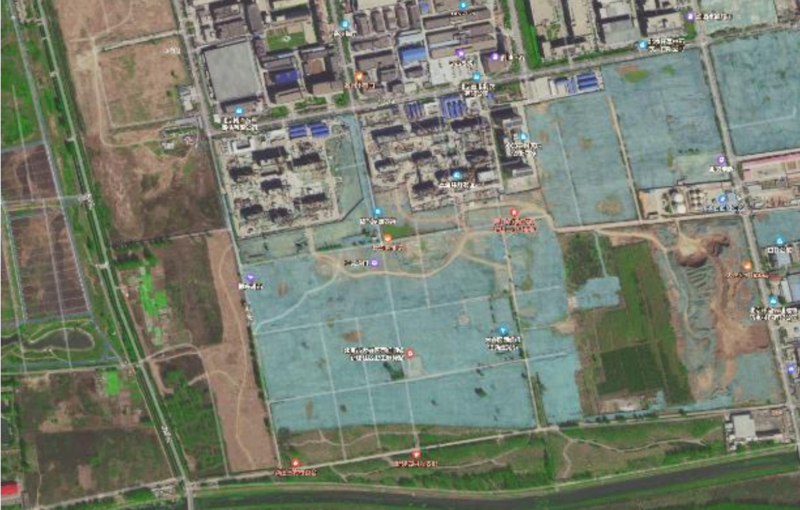
In this talk Dr Morris analyses anti-eviction political contestation from 2017 ‒ supporting the so-
called low-end population ‒ and communication practices used during the Covid-19 pandemic to
explore the vibrant material and digital geographies of contentious politics in China. After an
overview of the events in 2017 and during the Covid-19 pandemic, Dr Morris will focus in on the
visual artefacts and image files that were produced and circulated in the two case studies. More
specifically, the talk highlights how the vibrant material qualities of digital images, image files and
communication devices played a role in contentious politics, including the capacity for images to be
edited and mobile. The talk will also highlight the digital geographies that affect the production and
circulation of these images: the vibrant material and digital geographies of contentious politics. In
examining this topic Dr Morris will broaden academic understanding of the geographies of secrecy,
here focusing on the multiple spatialities of digital geographies of secrecy and the role of vibrant
material objects in these geographies
Speaker Bio
Dr Carwyn Morris is a Postdoctoral researcher based at the Manchester China
Institute, University of Manchester. His research explores China's digital
geographies, spatial governance and wanghong/internet celebrity urbanism. He
is the author of Moving to Keep Still: Dynamic Stillness in the Physical and Digital
Geographies of Beijing (Mobilities, 2021) and Spatial Governance in Beijing:
Informality, Illegality and the Displacement of the Low-end Population (China
Quarterly, forthcoming). He recently co-produced the self-published magazine, Pomelo,
a reflection on the 1930s Chinese women's magazine, Linglong.
The Kangaroo Man in the Paddock: Reproductive Technologies and Body Politics in Lily Hsueh's Writings of Family History
Po-hsi Chen, University of Cambridge
Tuesday 10 May 2022, 17:00
Abstract
In an emergency operation, Jenny loses her uterus to eccyesis. Her husband Michael, a
reproductive scientist, decides to bear a child for her by injecting a foetus into his body, thus
becoming the first pregnant man. This is the plot of the Chinese American novelist Lily
Hsueh’s 1992 telling title, Kangaroo Man. In this talk, Po-hsi Chen contextualises the novel
and its 1995 film adaptation within Hsueh’s writings on historical trauma, scientific discourse
and family history. Drawing on STS studies on reproductive technology and dystopian/sci-fi
literary scholarship, this talk will investigate how Kangaroo Man sheds light on gender
equality and Chinese American diaspora.
Speaker Bio
Dr Po-hsi Chen is Post-Doctoral Fellow in Taiwan Studies at the University of Cambridge. He
obtained a PhD in East Asian Languages and Literatures from Yale University. His research
interests include Taiwanese literature, global leftism and affect studies. His articles are
available in Inter-Asia Cultural Studies, Modern Chinese Literature and Culture, Chinese
Literature Today and East Asian Journal of Popular Culture.