
2018-19 Visual Culture Seminar
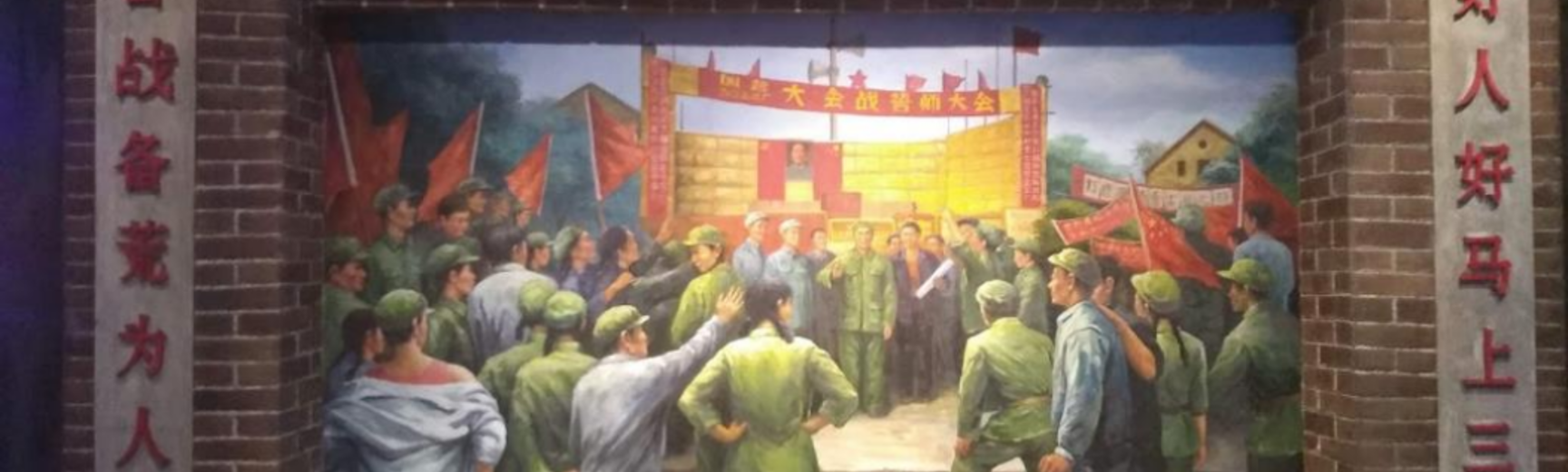
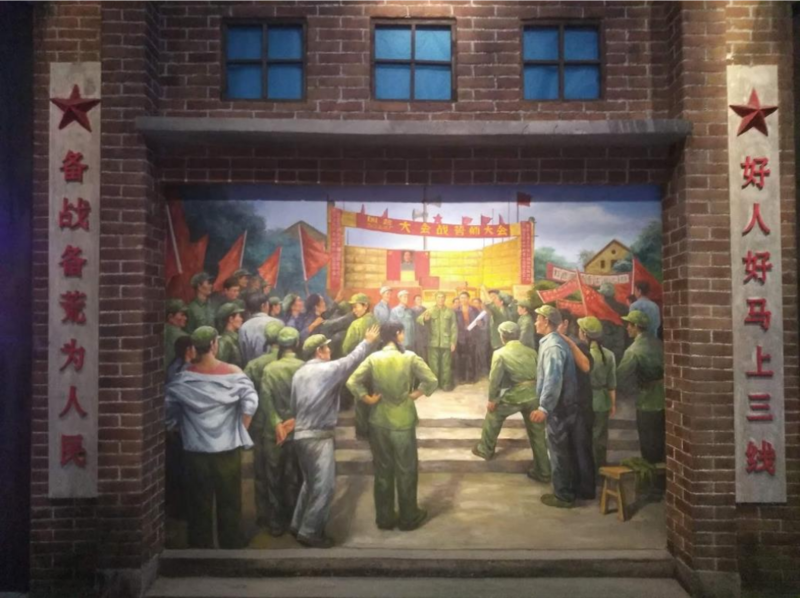
From Factory to Village, from Third Front to Cultural Revolution
Dr Paul Kendall, University of Westminster
Tuesday 26 February 2019, 17:00
Abstract
Since the turn of the century, there has been a significant upturn of interest in the Third Front within the PRC,
with various academic articles, films, museums and online forums devoted to this Maoist mega-project.
However, this coverage of the Third Front has been highly uneven, to the extent that the impact of this huge
military-industrial complex on Guizhou and other inland provinces – as well as the specifics of everyday life in
Third Front work units – continues to be partially hidden.
Paul Kendall draws on two case studies to illustrate the ways in which the Third Front and the hybrid rural-
urban qualities of its work units have been concealed by more established discourses in both the Chinese and
English languages. For the first case study, Kendall examines how and why the touristic branding of Kaili – a
small city in Guizhou province – has emphasized the area’s rural ethnic practices and overlooked its Third Front
industrial heritage. For the second case study, he examines two major themes in the English-language
reception of Wang Xiaoshuai’s films on the Third Front in Guizhou. Firstly, Kendall suggests that film critics
have interpreted these films according to a worldview that divides space into discrete categories of rural and
urban, and have thus overlooked the hybrid rural-urban qualities of Third Front work units. Secondly, Kendall
suggests that these critics have tended to ignore the centrality of the Third Front to these films as part of an
established historical discourse that absorbs events of the 1960s, 70s and even 80s into the vortex of the
Cultural Revolution
Speaker Bio
Dr Paul Kendall is a Lecturer in Chinese and Cultural Studies at the University of Westminster. His research
interests include urban and industrial space, rural/urban relations, ethnicity, everyday life, soundscapes, and
music. His new book, The Sounds of Social Space: Branding, Built Environment, and Leisure in Urban China
(2019), examines the production of social space in Kaili, a small city in southwest China, through its branding
as ‘the homeland of one hundred festivals’, ethnicized public spaces, high-decibel soundscapes, amateur
music-making practices and inhabitants’ conceptualizations of music, ethnicity and the city. His current
research explores worker memories and wider representations of the Third Front in urban Guizhou,
particularly Kaili, Guiyang and Duyun.
A Narrative Prosthesis? Disability and the Chinese Literary Imagination
Dr Sarah Dauncey, University of Nottingham
Tuesday 14 May 2019, 16.30

Abstract
Writing in the late 1980s, literary scholar David Der-wei Wang appears perplexed by the sudden and dramatic
appearance in Chinese fiction of what he describes as a ‘pantheon of deformity’ (jirenxing 畸人行): ‘All of a
sudden, the ‘Socialist New China’ once glorified by such writers as Yang Mo and Hao Ran has become a
dilapidated and grotesque haven filled with souls that are maimed physically or spiritually’ (Wang, 1988: 208).
Subsequent critics have attempted to tease out the numerous symbolic meanings of the multifarious
‘deformities’ borne by the ‘freakish’ inhabitants of that ‘grotesque’ literary world, and they have done so to
such an extent that one is left wondering whether there was space at all for non-metaphorical representations
of physical or mental impairment in post-Cultural Revolution China. Could disability be anything more than a
narrative tool in this new age of fictional exploration and innovation? In this talk, Sarah Dauncey examines the
way in which the contemporary Chinese literary imagination has used, but more often abused, disability in the
search for new modes of expression. She focuses here on two key strands – semi-autobiographical works
produced by writers with direct experience of disability (such as the prolific fiction writer and essayist Shi
Tiesheng 史铁生) and more explicitly fictional works (exemplified, for example, by the work of Han Shaogong
韩少功 and Yan Lianke 阎连科) – to demonstrate that while the inclusion of disability has been able to subvert
and challenge the conventions of socialist realism and understandings of disability, it has more often become
a ‘narrative prosthesis’ that cements pre-existing negative stereotypes of disability and impairment.
Speaker Bio
Sarah Dauncey is Associate Professor in the School of Sociology and Social Policy at the University of
Nottingham. Trained in classical and contemporary Chinese language, literature and social history, and with a
PhD in late-Ming women’s culture from the University of Durham, Dr Dauncey has published extensively on
gender, culture and identity in pre-modern and contemporary China. Most recently, she has pioneered a new
field relating to disability in modern Chinese culture. The results of this project have resulted in numerous
articles and book chapters, as well as a forthcoming monograph Disability in China: Citizenship, Identity and
Culture (Cambridge University Press).
Gendering Chinese Nationalism on the Small Screen
Professor Geng Song, University of Hong Kong
Wednesday 15 May 2019, 17:00
Abstract
A variety of gender-related relationships – between sexism and nationalism; women, the body, and the nation;
manhood and nationhood – have emerged in Chinese popular entertainment in recent years, revealing an
interesting yet little explored side of Chinese nationalism in the contemporary context. Nationalism reflects
an essentially masculinist world view. The rhetoric and norms of masculinity and femininity are closely linked
with kinship and family, which in turn constitute the foundation of the nation. Analysis of male and female
images in Chinese television programmes therefore introduces important gendered issues to contemporary
discussions of globalization and Chinese nationalism in response to the limitations of existing studies on
Chinese nationalism in the West, which focus primarily on the political dimension and understand such
nationalism as a form of one-way indoctrination and propaganda from the top rather than a 'structure of
feeling' arising from an array of complementary motivations. Through the lens of gender and sexuality in
Chinese television, the paper unravels the links between the state agenda and popular imagination/expectations
to reveal the ambition and anxiety associated with popular sentiments about China’s rise.
Speaker Bio
Geng Song is Associate Professor in the School of Chinese, University of Hong Kong. He has written extensively
on issues such as men and masculinities in China, Chinese television and Chinese nationalism. Among his
publications are: The Fragile Scholar: Power and Masculinity in Chinese Culture (HKUP, 2004); Men and
Masculinities in Contemporary China (co-author, Brill, 2014); Chinese Television in the Twenty-First
Century (co-editor, Routledge, 2015); The Sound of Salt Forming: Short Stories by the Post-80s Generation in
China (co-editor, Hawaii UP, 2016); The Cosmopolitan Dream: Transnational Chinese Masculinities in a Global
Age (co-editor, HKUP, 2018), as well as a number of articles in journals such as Modern China, The China
Journal and Asian Studies Review. He co-edits a book series on 'Transnational Asian Masculinities' for Hong
Kong University Press. He is currently working on a project on gender politics and nationalism in Chinese
television.
Cultural Context of Travelogues during Taiwan’s Martial Law Period (1949–1987)
Professor Lin Shu-hui, National Taiwan Normal University
Tuesday 11 June 2019, 17:00
Abstract
The travelogues during the martial law period in Taiwan (A.D. 1949–1987) were diverse and complex, not only
for their way of viewing the world, but also for the development of Taiwanese society, history and culture. Lin
Shu-hui explores the special qualities of Yin Hai-kuang, Wu Zhuo-liu and Zhong Mei-yin’s travelogues during
the martial law period in Taiwan. This is based on the multi-dimensional criticism and the worldliness theme
of travelogues. Whether it is a private letter, a piece of newspaper, a magazine or a book with a photo attached,
travel writing exceeds a flexible form, showing implications of the words. Although Taiwanese people’s visits
to the US can be placed in the context of the cultural foreign policy since the Cold War in the US, this period
overlaps with the martial law period in Taiwan. Therefore the travelogues implied different perspectives and
were able to provide references to other countries’ critical theory.
Yin Hai-kuang’s travelogues showcase a resistance strategy of a thinker facing the hegemony from the KMT to
Taiwan with blunt criticism or metaphors. The multi-dimensional criticism is aimed at the Chinese centralism,
the party-centrism of settlers in Taiwan, and also criticizes American centralism. Such a multi-objective
criticism model shows the close relationship between literature and power relations. As far as the theme of
worldliness is concerned, the travelogues of Taiwan during the martial law period contain multiple levels of
practices locally, presenting the value of speaking for free thoughts in special times.
Wu Zhuo-liu used the landscape as a medium to spread the free code; or to use Kenya’s independence to
celebrate freedom, to imply his desire for freedom, and to clarify the universal values of basic human rights,
presenting the worldliness issues of race and colonial policy. The London Freedom Speech Square is a
landscape for public opinion and closely related to the development of democracy. Wu Zhuo-liu uses this to
express his deep feelings of freedom of speech. He went through the code of the Statue of Liberty and the
Washington Monument, questioning whether the United States adhered to the concept of freedom; this
metaphor signified the longing for and pursuit of freedom in life, showing that basic human rights did not meet
the expectations. From the discussion of the relationship between the South Island languages, to the
preservation of the educational philosophy of the Maori language in New Zealand, the Taiwanese aboriginal
cultural space is spoken.
The Zhong Mei-yin travelogues express the process of localization and intermixing of various languages in a
specific place with local and the creativity after the integration of languages. Due to Taiwan’s special martial
law period geopolitics, she sought progress in democracy. The cultural window of viewing the world was
opened. These travelogues reveal the author’s perception of their moving experiences, also being associated
with multi-dimensional criticism and the worldliness theme, which contain the energy of literature to improve
society.
Speaker Bio
Lin Shu-hui is a professor in the Department of Taiwan Culture, Languages and Literature at National Taiwan
Normal University. Her academic works include A Collection of Taiwan Customs (2004), Taiwanese Prose
during the Qing Dynasty (2007), Customs & Memories and Enlightenments: A Digital Archive of Taiwanese
Cultural Discourse (2009), The Mood of the Travelers: Taiwanese Travel Writings during the Colonial Period
(2014), Represent Culture: Imagined and Discourse of Moving during Modern Period in Taiwan (2017).
Professor Lin specializes in research on travel writing, the history of Taiwanese literature, and Taiwanese
culture. She is a visiting scholar at SOAS and has been a visiting scholar at Harvard University, Academia Sinica
of Taiwan in the Institute of European and American Studies and as well as their Institute of Taiwanese History,
Chinese Literature and Philosophy. She has received many awards in Taiwan, including the Academic Award
for Research, the Award of Taiwanese Literature Research, and a publishing award from the Research Institute
for the Humanities and Social Sciences. She has participated in a study of U.S. Institutes on U.S. Culture and
Society in New York University (2016), TUSA‐Harvard Collaboration Program (2018). In 2019, she got a
Fellowship from the Ministry of Science and Technology to pursue advanced research in the UK