
2017-18 Visual Culture Seminar
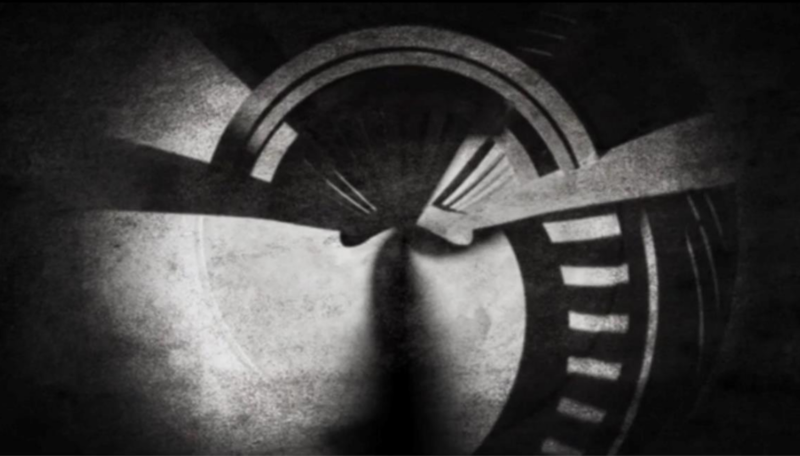
Electric shadows reloaded: the post-digital animateur,
shadow play and handmade cinema
Professor Paola Voci, University of Otago
Monday 6 November 2017, 17:00
Abstract
In the work of an increasingly visible number of solo producers (i.e. the postdigital
animateurs), the moving image is more intimately connected to the human
creator/manipulator/performer, rather than the technological medium (be it the kinoeye,
the film strip, or the digital software). Reframing their animations within the broader
temporal and spatial context of handmade cinema, Paolo Voci explores a longstanding, but
largely unscrutinised, connection between cinema and the performative apparatus of the
shadow play to sketch a parallax story – rather than a parallel history – of manipulated and
evocative moving images that are not contained in the institution of cinema and do not
submit themselves to the supremacy of the index.
Speaker Bio
Paola Voci is Associate Professor at the University of Otago. She is the author of China On
Video and co-editor of Screening China's Soft Power. Her research focuses on theories and
archaeologies of cinema, documentary, animation and other video practices in China.
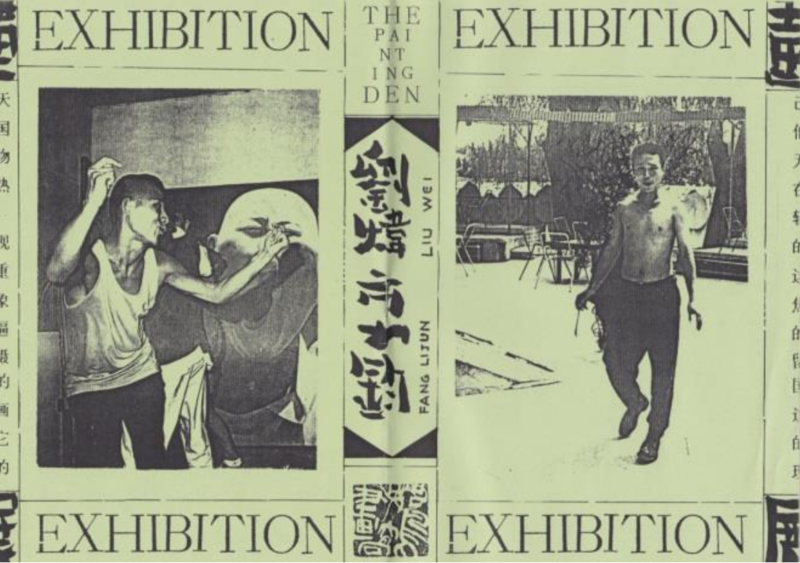
Blockbusters, Biennales and Market Economy: the Global Spin of Contemporary Chinese Art
Dr Francesca Dal Lago
Tuesday 28 November 2017, 17:00
Abstract
This lecture will draw on Francesco Dal Lago’s personal experiences as a participant in the
Beijing (and Chinese) art scene during the late 1980s and early 1990s and the way this led
her to a career in Art History with a focus on 20th century China. Conscious of her double
and often irreconcilable role as both actor and commentator, she adopts a subjective
position in reviewing some of the phenomenal shifts experienced in the international
perception of this artistic production. From smoky and crowded dorms in dilapidated post-
socialist buildings to the glitz of the Venice Biennale, from unheated rural huts to cocktail
parties held in private yachts and 5-star hotels, Francesca Dal Lago has observed
unimaginable changes in the life conditions, philosophy and personal assets of Chinese
artists and their circle.
Speaker Bio
Dr Francesca Dal Lago is an independent art historian and critic based in Paris. In the 1980s and
1990s she spent several years living in Beijing where she was, at different times, student at
the Central Academy of Fine Arts, Cultural Officer at the Italian Embassy and researcher.
From 2001 to 2004 she was assistant professor of Chinese Art History at McGill University,
Montreal. After moving back to Europe she held a post-doc at Leiden University and was an
associated researcher at the Centre de recherche sur les civilisations de l'Asie orientale in Paris. In
Paris she collaborated with the Musée Cernuschi on exhibitions in 2011 and 2016. She has
published widely on contemporary art, commercial art and Maoist art in China.
The Trajectory from Tongzhi Literature to the BL World
Professor Ta-wei Chi, University of Hong Kong
Wednesday 15 May 2019, 17:00

Abstract
With his expertise on ‘tongzhi’ (‘LGBT’ in Chinese) in Taiwanese literature, Dr Ta-wei Chi will discuss
how Taiwanese society’s understanding of tongzhi subculture has relied heavily on the act of reading
literature and other materials. He will historicise how, by the 1990s (the decade of rapid
democratisation in Taiwan), Taiwanese readers had shifted their attention from tongzhi literature to
popular culture. Since the 1990s, boy love (BL) cultural products (such as BL manga and online videos)
have enjoyed a fast-growing popularity. For today’s college students in Taiwan, many of whom are
gay-friendly, their everyday understanding of homosexuality results substantially more from the BL
cultural phenomenon than from the once-popular tongzhi literature. Dr Chi will explain how tongzhi
literature and the BL cultural products converge and how they differ from each other. The trajectory
from literature to the cultural industry is also the trajectory from a medium with the weight of
(national) history to a transnational medium with much less historical baggage. Thus, this talk also
presents the competition for cultural hegemony between literature and popular culture in Taiwanese
tongzhi subculture.
Speaker Bio
Ta-wei Chi, PhD Comparative Literature UCLA, is currently Associate Professor at the Graduate
Institute of Taiwan Literature at National Chengchi University, Taiwan, where he teaches queer
theory and disability studies. His science fiction novel Membranes has been translated and is
available on the French and Japanese Amazon websites. His award-winning monograph on
historicizing homosexuality in Taiwanese literature was published in 2017.
“Reunion is A Dark Room”: Dream and the Camera Obscura of Kaili Blues
Professor Jiwei Xiao, Fairfield University
Tuesday 11 June 2019, 17:00
Abstract
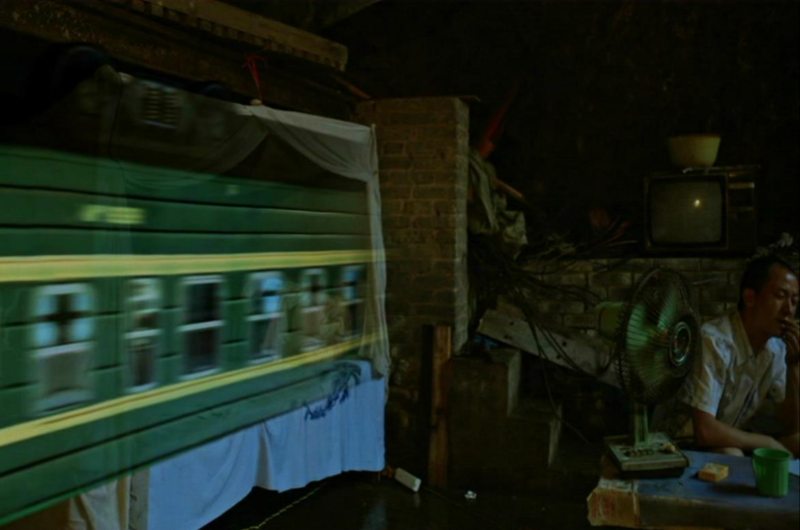
Bi Gan’s Kaili Blues (2016) is a film about time lost and regained through remembrance and
dream. Doubling and transference that occurs in the 41-minute take is underwritten by the
logic of the unconscious. Citing Hou Hsiao-hsien, Andrei Tarkovsky, and Apichatpong
Weerasethakul, the film traverses the slippery zone between the past, dream, and reality.
The uncanny dream sequence in Kaiili Blues echoes Buddhist ideas of predestination and
reincarnation — “Every encounter is a reunion.” But Bi Gan further extends it through
poetry: “reunion is a dark room.” A cinematized dream, Bi Gan’s Kaili Blues is thus also a
dream of cinema. Objects such as trains, caves, fans, and that undulating mosquito net are
all analogues of a mechanical apparatus with powers to hypnotize and feed the imagination.
If the most notable Chinese films have for three decades prided themselves mainly as
cinema of witness, Bi Gan would go in a different direction altogether: his film would
function as a “medium,” in the anthropological sense, to access other realms of
consciousness.
Speaker Bio
Jiwei Xiao is Associate Professor of Chinese at Fairfield University. A PhD in Comparative
Literature, Xiao researches modern Chinese literature and contemporary cinema. She has
published literary essays on Shen Congwen, Eileen Chang, and Wang Anyi in various
journals.
Her publications on cinema include: “China Unraveled: Violence, Sin, and Art in Jia Zhangke’s
A Touch of Sin” (Film Quarterly 2015), “A Traveler’s Glance: Antonioni in China” (New Left
Review 2013), and “The Quest for Memory: Documentary and Fiction in Jia Zhangke’s Films”
(Senses of Cinema 2011).